
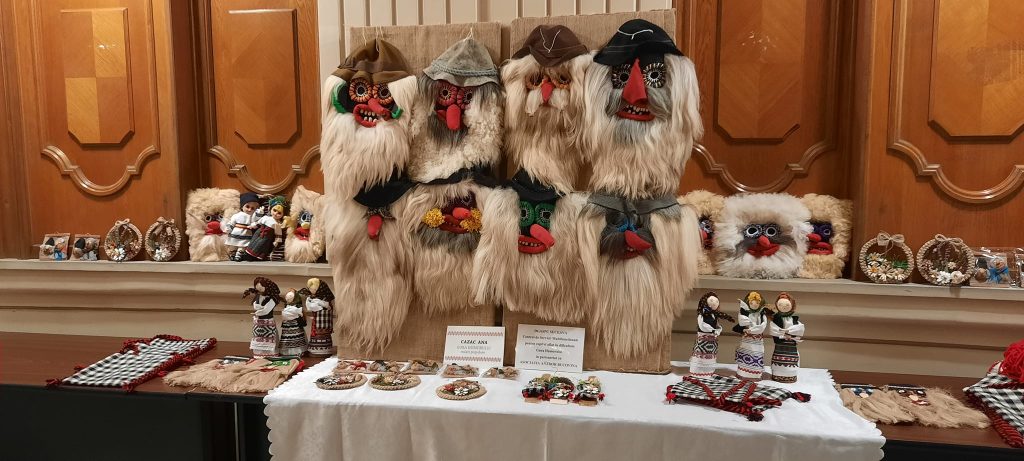
In her workshop near Gura Humorului, Ana Cazac creates characters inspired by the winter traditions of Bucovina: old men, old women, devils, and figures from traditional folk theatre. Each mask is handmade from natural materials, and for the folk craftswoman this craft represents more than an artistic activity; it is a way of keeping the cultural memory of the region alive
From Occupational Therapy to the Art of Masks
Ana Cazac holds a degree in psychology and works with children, practicing occupational therapy. Alongside her professional activity, she discovered a passion for traditional mask making and began creating her own pieces.
For more than 15 years she has worked with children and tried to bring them closer to traditional crafts through creative activities and workshops. For her, folk art is a way of stimulating children’s imagination and creativity.
“Children need to learn about tradition from an early age, because that is how it will be carried forward,” she says. In the past, she also coordinated a workshop at a children’s center in Gura Humorului, where youngsters learned various traditional techniques, from rope weaving and making small traditional bags to crafting masks or decorations made from corn husks.
A Craft Inspired by Childhood
Her passion for masks began in childhood, when she watched the groups of carolers and masked performers who walked through villages during the winter holidays.
“I loved the groups of carolers and especially the masked performers. Each of them embodied a character and created a special atmosphere for the New Year celebrations,” she recalls.
Although masks were not made in her family, her grandmother taught her how to weave and sew, skills that later became the foundation of her craft. In her family there were also many discussions about the Bucovinian ethnographer Simeon Florea Marian, and these stories helped bring her closer to local traditions.
Characters from Folk Theatre
The masks created by Ana Cazac mainly represent characters from the folk theatre of winter traditions: old men, old women, devils, and figures from the traditional plays with the goat and the bear.
These characters appear in groups of masked performers who walk through villages around the New Year, a tradition that remains very much alive in Bucovina. Such groups often include symbolic figures such as the bear, the goat, the bride, or various satirical characters.
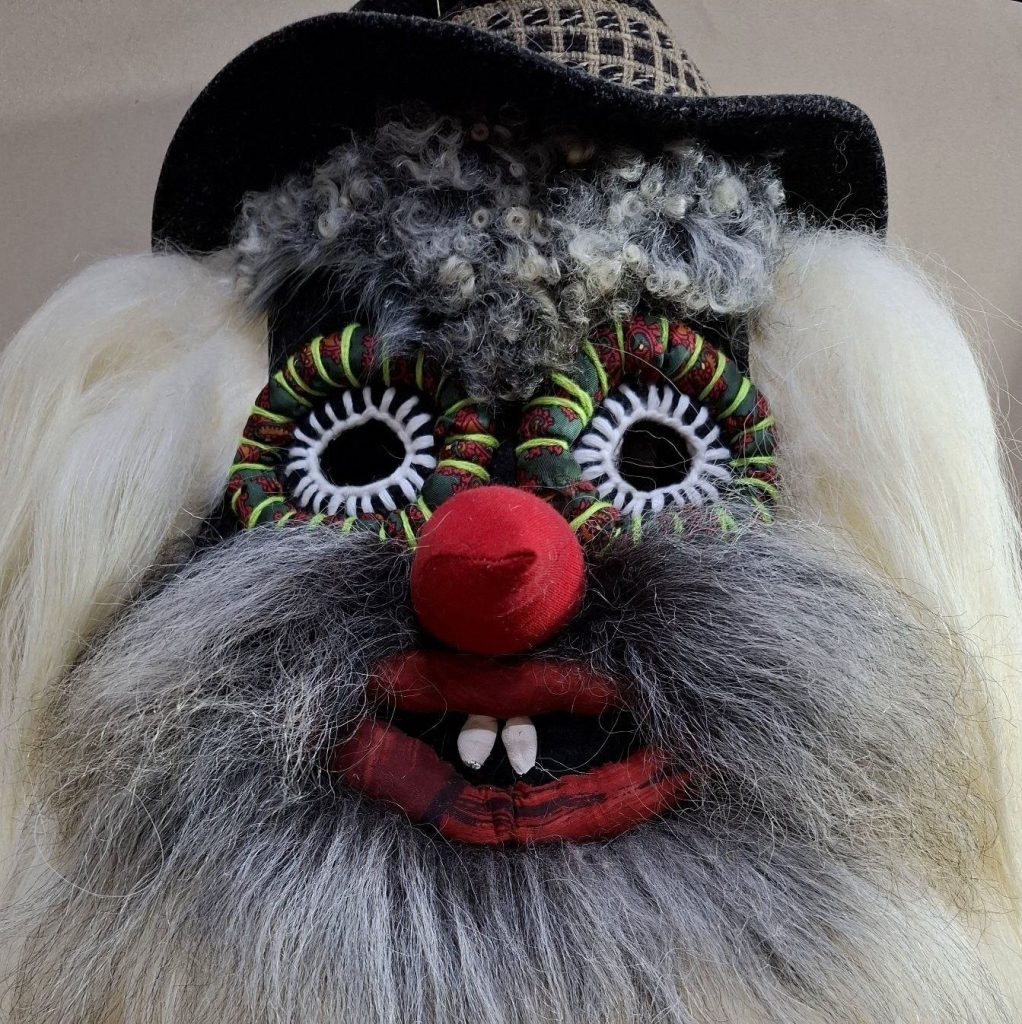
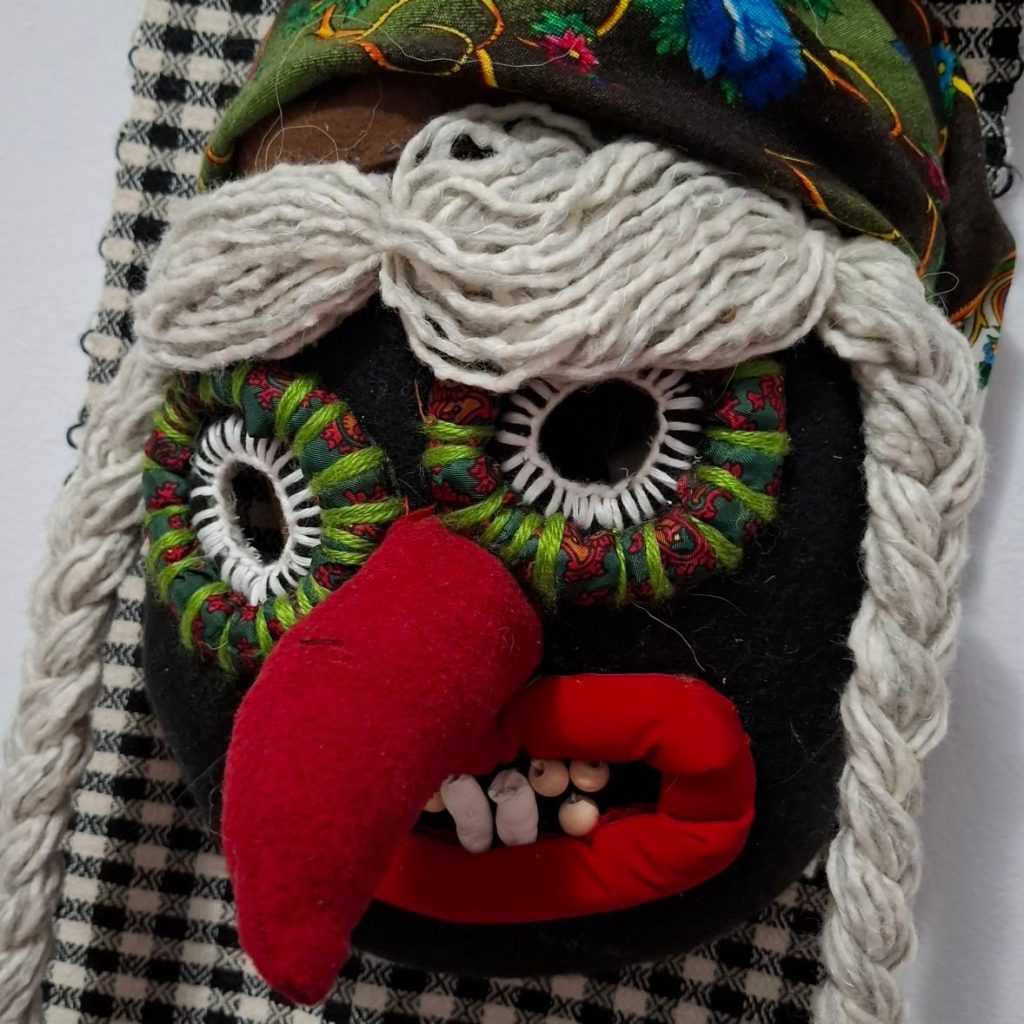
For the Bucovinian artist, facial expression is essential. A mask must convey emotion, whether it is joyful, sad, or ironic, so that the viewer feels the character coming to life.
Natural Materials and Traditional Techniques
The masks are mainly made from natural materials such as sheep fur, textiles, rope, or hemp fibers. For details she sometimes uses beans or wooden beads.
The process begins with creating the textile base of the face, over which the facial features are shaped, after which the fur is added. Color contrast is very important so that the eyes, nose, and mouth stand out clearly.
The artist prefers strong, contrasting colors because they highlight the expressiveness of the mask.
Over the years, Ana Cazac has participated in numerous craft fairs and traditional festivals, where she has presented her work alongside other folk artisans. Her masks have reached not only collections in Romania but also abroad, being purchased by tourists and collectors.
Although there is demand, the artist says she does not produce masks in series and prefers to work patiently on each piece so that every mask remains unique.
Passing the Tradition
One of the things that brings her the greatest satisfaction is being able to pass this craft on to younger generations. Over time she has worked with many children interested in folk art.
One of the students she guided even won first prize at the National Olympiad of Traditional Artistic Crafts in the category of folk mask making, confirming that the tradition can continue through young people.
A Craft Driven by Passion
Although her masks sometimes reach folk ensembles or private collections abroad, for Ana Cazac the craft remains, above all, a passion.
For her, each mask has its own story and sooner or later finds its rightful place, whether in a performance, in a collection, or on the wall of a home.