
Folk traditions represent a true spiritual treasure of the Romanian people, passed down from generation to generation. In the Romanian village, traditions were not only moments of celebration but also ways through which people expressed their connection with nature, time, and faith.
During the winter holidays, these traditions come to life through carols, the sorcova ritual, or mask dances such as the goat and the little horse (căiuți). Behind these customs lies the meticulous work of folk craftsmen who create the costumes and objects necessary for these rituals.
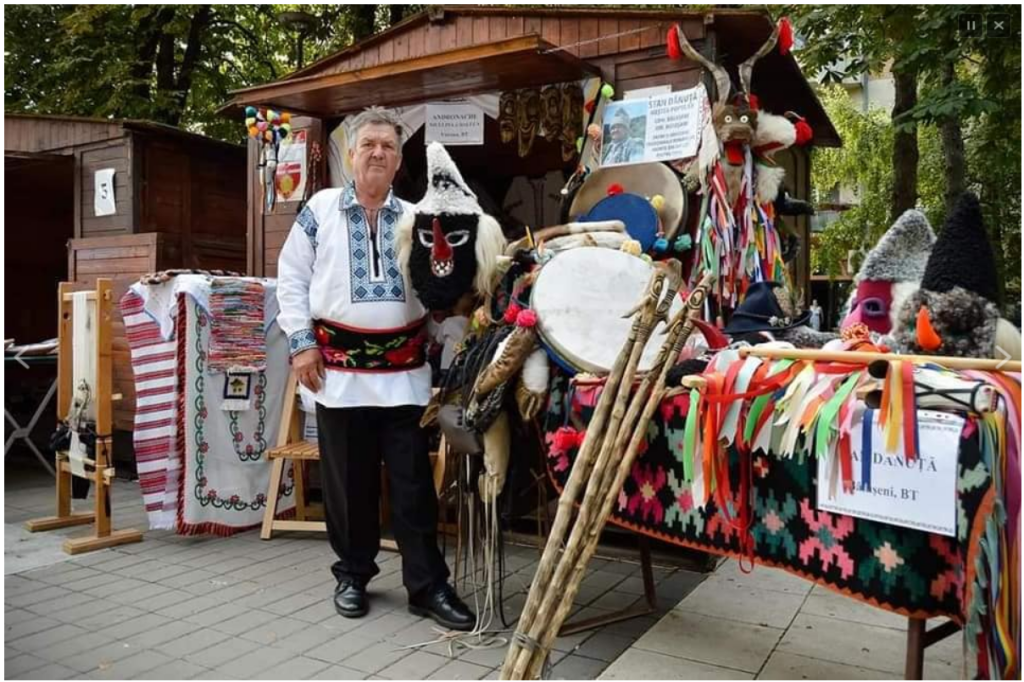
One of these guardians of tradition is Stan Dănuță, a folk craftsman from the village of Zăicești, Bălușeni commune, Botoșani County.
The Role of Masks in Tradition
In the past, masks also had a ritual role. They were worn during the New Year celebrations to drive away evil spirits and bring good fortune to the community.
“After the holidays, the masks were burned. People believed they drove away evil spirits, and the following year new ones were made.”
For Stan Dănuță, every mask tells a story and represents a piece of the Romanian village’s identity.
“Without traditions and customs, we are no longer ourselves,” says the craftsman.
At the age of 71, he continues his work, convinced that traditions deserve to be carried forward.
A Passion Born in Childhood
Born in Ibănești, Stan Dănuță later moved to Zăicești, where he still lives and continues to work daily in his workshops, keeping traditional customs alive.
His passion for masks began in childhood, inspired by his mother.
“My mother dressed me every year in a different costume: sometimes an old man, sometimes an old woman, sometimes a little horse. Those were the traditions in our village,” the craftsman recalls.
Gradually, he began making masks himself, at first for relatives and children in the village.
“Usually the girls performed the goat dance, while the boys played the little horses. Little by little, my love for folklore has stayed with me until today.”
Another important moment in his development was meeting a craftsman from Vorona who made traditional masks and from whom he learned many techniques of the craft.
Three Workshops in One Yard
In the yard of his home in Zăicești, Stan Dănuță has set up three workshops: a carpentry workshop, a leatherworking workshop for traditional footwear (opinci), and a fur workshop. Here he works every day, transforming simple materials into objects full of meaning.
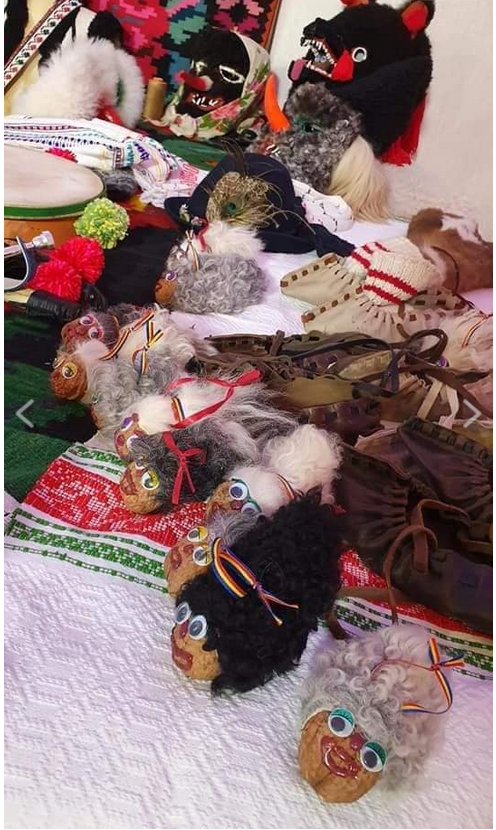
From his hands come traditional masks, pigskin opinci, little horses, goat costumes, drums, and bells, all made from natural materials.
“I’ve been making walnut toys for about a year, but I’ve been making opinci, little horses, and goats for almost 30 years. I started making drums about 7–8 years ago,” the craftsman says.
For him, authenticity is essential. The materials used are as close as possible to traditional ones: wood, leather, fur, and even animal teeth.
“I use pig, cow, or goat teeth. I boil them, disinfect them, and put them on the masks. That’s what makes them look authentic.”
How a Traditional Mask Is Made
The process of making a căiuț (traditional mask) is complex and time-consuming.
“First I make the head from wood, then I add the ears, the leather bridle, the eyes, the mouth, and the nose. After that comes the crown with tassels.”
Sometimes a single little horse may have dozens of tassels.
“One little horse can have 60–70 tassels. If I make ten at once, it can take up to a month to finish them.”
Although he continues to work with the same passion, the craftsman says traditions are no longer appreciated as they once were.
“Children pay more attention to phones and the internet. That’s fine too, but traditions should not be forgotten.”
He believes that only through community involvement and education can these traditions survive.
“If we do nothing, nothing will remain.”
Passing the Tradition: Workshops for Children
Besides working in his workshop, the craftsman is actively involved in passing traditions on to younger generations. Over the years, he has organized many workshops for children and participated in fairs and festivals.
He also collaborates with the folk ensemble Balada Nouă, founded a few years ago by Ionel Petrișoru.
“I like helping children develop their imagination. That’s why I’ve been coming to the traditions and crafts camp Past, Present, Future in Romanian Art since its first edition.”
During these workshops, children learn to create simple objects or to perform traditional dances.
“I give them a mask, a goat, a little horse, and I teach them how to dance. At first they say they can’t do it, but after a few days they can’t wait to try.”